
Global Food Chains Want a Piece of the American Market
While U.S. restaurants battle rising costs and cautious consumers, international chains are rushing in the opposite direction. They're coming to America at roughly double the pace of a decade ago.
"The U.S. isn't just a profit center anymore — it's a validation market," said Aaron Allen, a restaurant consultant and global markets expert. "Operators come here to prove their model can compete under the toughest conditions."
The trend is especially strong among Asian brands. South Korean quick-service giant Lotteria brought its shrimp burgers to California this year, and hot pot concepts are booming. Technomic data shows 43% of consumers find global flavors appealing, with that number climbing above half for millennials.
RELATED: Hot 'n Now Plots Summer Comeback with Two New Michigan Locations
Big Way Hot Pot, an 18-unit Canadian chain, opened four Los Angeles locations this summer with plans for at least 10 more nationwide. Unlike traditional hot pot restaurants where groups share large pots, Big Way uses a fast-casual model where customers pick ingredients from a fridge, pay by weight and cook at their own table.
"Traditional hot pot is about sharing, but we wanted to make something that's customizable and affordable for every single customer's preference," said cofounder Christiana Luo. "Gen Z and millennials value flexibility and customization. With Big Way, you can control your portion and budget."
Not every expansion goes smoothly, though. Udon, an 81-unit Japanese noodle chain based in Barcelona, arrived in Miami in 2021 and quickly discovered that each U.S. city operates like its own market.
"The United States is the mecca," said cofounder Jordi Vidal. "We wanted to go there and learn, even though it is hard, because it's a very competitive market with different customer preferences than we are probably used to in Spain."
RELATED: The Most Innovative US Restaurants: Where AI and Robots are Changing the Dining Experience
Coffee is another battleground. Black Sheep Coffee, the U.K.'s fourth-largest coffee chain, now operates four locations in Miami and Dallas. The brand had to make significant adjustments for American tastes.
"You can't sell an 8-ounce coffee in Texas," said cofounder Gabriel Shohet. "Even if you charge 50 cents less, people are going to be offended by the size. Americans like to drink coffee in really large quantities up to 32 ounces."
Black Sheep plans 500 locations by 2028, with half its sales coming from the U.S.
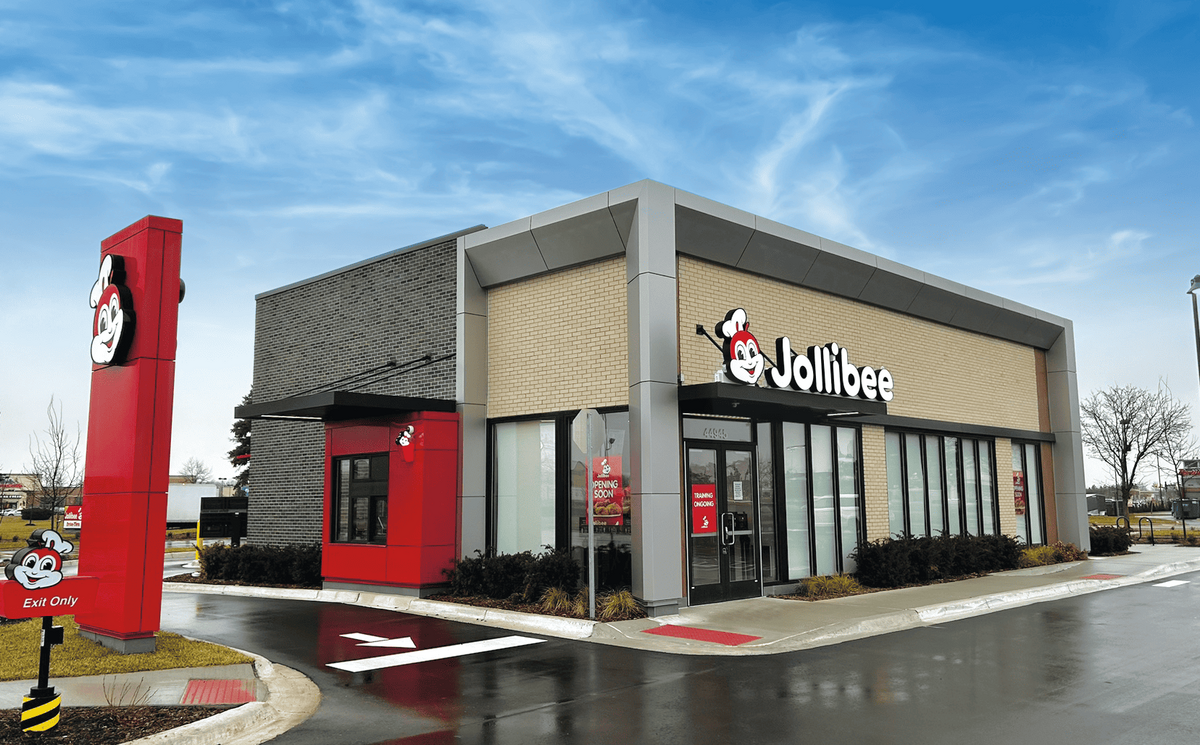
The brand that has already cracked the code is Jollibee. The Filipino chain famous for its sweet spaghetti, opened its first U.S. store in Daly City, California, over 25 years ago. Today it's the fourth-largest international chain in America with 75 units.
"Every time we opened, there were huge lines down the block," said Maribeth Dela Cruz, president of Jollibee North America. "Filipino customers would act as brand ambassadors and introduce their friends to the McDonald's of their country."
The payoff for succeeding here extends far beyond American profits. "Capital follows credibility," Allen said, "and U.S. success serves as a global credential."